I've always been a huge fan of innovation in all its forms and the Japanese do things on such a grand scale and that's especially true of infrastructure projects. This most recent development is a direct result of solutions having to be found after Fukushima.
However there are other stunning examples of these projects that simply wouldn't be undertaken in other developed democracies. For example if you look at the sheer scale of the storm drain system that they have created in Tokyo. Stunning and truly beautiful.
Friday, 15 November 2013

Wednesday, 6 November 2013
To listen, or to consume?
 In this digital revolution we are all living through it is arguable that
the area of our lives in which it has had the most consistently
personal impact is on the music we ‘listen to’. From burning CDs, to
using Napster, to using iPods, to switching to iTunes, to discovering
new music with Shazam, to watching music on YouTube, to switching from iTunes to Spotify, to watching Radio 1 on your phone. In the space of a decade, the way we consume music has drastically changed.
In this digital revolution we are all living through it is arguable that
the area of our lives in which it has had the most consistently
personal impact is on the music we ‘listen to’. From burning CDs, to
using Napster, to using iPods, to switching to iTunes, to discovering
new music with Shazam, to watching music on YouTube, to switching from iTunes to Spotify, to watching Radio 1 on your phone. In the space of a decade, the way we consume music has drastically changed. 'Consume' is an important word in this context, because in the past few years the concept of the pop song and the pop star has morphed. In mid-2012 the world was introduced to Psy, the star that fronted Gangnam style. The video is still the only one on YouTube to have reached 1 billion views and by the turn of the year it is likely to have reached 2 billion. Importantly this track was only (initially) released online, backed by a highly sophisticated marketing campaign from Korean media company YG Entertainment. The company made sure all the ingredients for success were right before they released. 1) They had built a huge database of warm users that were likely to spread the video. 2) The video was designed to specifically combine child-friendly colours, with major Korean stars, a major Asian meme from the Korean arm of the ‘got talent’ franchise and careful blend of comedy. 3) They had a scalable viral escalation strategy to push the content out of the Asian market and into the US and Europe. This recipe was spot on and for one year only, Psy became the biggest thing on the web.
The K-Pop model
Gangnam Style is an important part of the visual music story because YG Entertainment has used it to push out the company’s K-Pop content into the US market. Most notably so far was at Sunday’s Youtube music awards, an American based show, but with a huge global remit. The ‘surprise’ winner of the night was Girl’s Generation for ‘video of the year’ with ‘I got a boy’. Of course ‘surprise’ winner is far from the correct description. This was a win constructed in Korea by a company that gets how music works now. Their stated objective of pushing into the US is now paying off in a massive way by hooking into how the web works and how youth audiences access content.
The Youtube music awards themselves were an interesting phenomenon. Chaotic, completely different, streamed not broadcast, live and raw. Mainstream media outlets found it confusing and unexpected. The internet found it hard to understand. However, its mixture of live performance, live recording, anarchy and its unscripted nature are a perfect fit for the internet’s visual music age; one where everyone is searching for the next big thing and the next phenomenon.
Changing the music industry revenue model
This transformation is being felt most severely by the mainstream record industry. The writing has been on the wall for a long time with a slow decline in sales, but in the past few months, recorded album sales have plummeted off a cliff. This is at the same time as iTunes revenues down for the first time ever, but rental models such as Spotify are soaring. Services such as Spotify challenge the ownership paradigm fundamentally. After all, why would you own anything when you can simply rent it? Actually, that may be the internal conversation that the older demographic is having. The younger demographic for the longest time have been saying why would we pay anything at all? The music industry took a long time to understand the non-payment mindset. However, after a long period of adjustment, the mechanism has been put in place to ensure that Youtube ad revenue sharing and Spotify licensing costs now more than compensate for the loss in revenues from record sales, so much so that 2013 revenues on recorded music in the UK will increase for the first time in eight years.
That non-payment argument is no better illustrated than when you start to look at the nature of today’s pop stars and their multi-platform existence. If we take a look back at that album sales data from last week again, at number 1 we have Katy Perry selling a paltry 300,000 units in her first week of release. Conversely however, her Twitter following since the release of Prism has shot through the roof to make her the most followed person on the planet with over 45 million people tracking her every 140 character movement. Look further down the list of sales and we find Miley Cyrus with a mere 45,000 units shifted, yet she is the most searched for celebrity on the planet thanks to her twerking at the VMAs and the subsequent release of the controversial wrecking ball video, a video with a quarter of a billion views. And it is with Cyrus we complete the loop. Her transformation has everything to do with consumption and very little to do with music. Her reimagining as Disney Princess turned bad, is a direct result of the way that the market accesses internet content today and that trajectory looks set to continue.
Wednesday, 23 October 2013
The importance of integrated social media strategy
 Two
incidents in the past week have highlighted the dangers of businesses
treating social media as a stand-alone communication channel that sits
separately from the company’s core business.
Two
incidents in the past week have highlighted the dangers of businesses
treating social media as a stand-alone communication channel that sits
separately from the company’s core business. The first will no doubt become a classic PR case study. On the day that British Gas chose to announce significant fuel price rises, its PR department went ahead with a planned Twitter Chat, hashtagged '#askBG'. The team had billed it as an opportunity to ask questions of the Customer Services Director, Bert Pijls. The timing simply couldn’t have been worse. The twitter storm that ensued was huge, as disgruntled consumers used the opportunity to post tweets such as:
"Hi Bert, which items of furniture do you, in your humble opinion, think people should burn first this winter? #ask BG"
The hashtag trended globally and ended up on the front page of the Guardian, The Times and The Telegraph. Similarly yesterday Ryan Air’s ‘larger than life’ CEO Michael O’Leary, took to Twitter for another live Q&A. The idea was that passengers could post questions to the airline’s boss, using the hashtag '#GrillMOL'. However the CEO seemed unaware that his inappropriate response to one of the first questioners – a woman – would be seen by everyone. His comment (“Nice pic. Phwoaaarr! MOL”) was rapidly re-tweeted and from there he was back-pedalling.
It could be argued that O’Leary’s combative entrance onto Twitter is simply another extension of the brand ‘that everyone loves to hate’. However it was his clear lack of understanding of the platform that suggested this was a mere add-on activity.
Both cases highlight how social media, despite its increasing importance to a brand’s overall presence, is still underestimated in terms of its reach, impact and how consumers use it. In order to use social effectively, those that are handling the platforms have to be ready to answer questions about every part of the business. Social is not a channel that can be controlled. Customers will use it to talk to brands about everything, so the message has to be plan, plan and plan some more. By ensuring that social is at the heart of every big announcement and each small detail, brands can use it as an incredibly effective customer engagement tool.
Tuesday, 8 October 2013
Will Twitter's IPO shrink the size of the accessible web?
 Twitter's recent IPO announcement
is the latest in a number of high profile public offerings from social
media giants. It follows the mega IPOs of Facebook and LinkedIn and also
comes in the wake of other socially connected companies' public
offerings, such as Zynga and Groupon.
Twitter's recent IPO announcement
is the latest in a number of high profile public offerings from social
media giants. It follows the mega IPOs of Facebook and LinkedIn and also
comes in the wake of other socially connected companies' public
offerings, such as Zynga and Groupon.It is an indication of just how important these platforms have become, not just to the web, but to the whole of society, that they are valued so highly and get such huge media attention. However, there is an argument to say that as they all cease to be independent, that we all start to miss out.
The filter bubble
In 2011 Eli Pariser wrote 'The filter bubble'. The book outlines his theory that the more we use the web, the less rich and varied our experience becomes. He argued that because of the way web software learns how you behave and what content you consume, that in fact, as you use it more you are less likely to encounter a contrarian view. That's because you are simply served content through search and social interactions that fit with a profile you create daily and increasingly polarises you.
This is particularly noticeable if you use Google as your primary search engine. Google's algorithm ensures you receive personalised results. On one hand this is great as you tend to get the stuff you want, but it also means increasingly you only see content you are likely to agree with and therefore are less likely to question certain 'truths'.
The Twitter bubble
With Twitter the bubble is slightly different. The way a user builds their Twitter profile shapes what content they see in their stream. The people you follow, the key words you use in your biography and the hashtags you follow, all help to shape the content you see, but also arguably, limit the content you are exposed to over time.
The Twitter IPO makes this phenomenon even more interesting. A lot of coverage in the past few weeks has focused around the fact that Twitter hasn't been profitable. Twitter are laying out plans for a whole host of commercial growth options, including greater integration with TV, increasing levels of tweet data mining, and of course more advertising.
Up until now it's been in Twitter's interest as a network to be as open as it possibly can be, but the commercial imperative that will be visited upon the company following its sale will inevitably force the platform into highly specific targeting around a whole number of commercial propositions. That will mean that the user's experience of it will inevitably become narrower and less eclectic leading to a further narrowing of experience.
Keeping the web open and democractic
It's worth noting that 20 years after the open, democratic web was born, it is possibly one of the most monopolised places you could visit. In all areas choices are narrowing. Consider the fact that increasingly there is one place to look for things (Google), one place to shop for new goods (Amazon), one place to sell things (Ebay), a couple of places to talk to your mates (Facebook and Twitter). That level of monopoly simply won't be good for business in the long term. It simply means there is increasing control over the channels to market and ultimately the price at which that channel can be sold. It's important that companies consider all available channels to ensure the web continues to be an open marketplace.
Wednesday, 25 September 2013
Advisers are doing it for themselves
 Last Tuesday saw the launch of Advisertech a new online and social media self-help platform set up by Pete Matthew MD at Jacksons Wealth.
 Pete has been highly active in the social media space for around 5 years now, across a number of online channels, most notably on Twitter and Linked In which he uses to spread not only his own opinion but also the content of his financial education .tv site Meaningful Money. Meaningful Money is an online information platform delivered by video and podcast that he set up a few years ago to educate the general public about financial services and everything they needed to know about financial products.
The channel has been a huge success, increasingly driving new business for Jacksons and also landing Pete with industry accolades, including the Professional Adviser Financial Education award in 2011. After 3 years of success Pete has now made the decision to share some of the secrets of his success and believes any adviser can create the same things as he has.
Advisertech is another education platform, but this time set up to educate Pete’s adviser peers in creating a great online presence. A few months ago he posted about his social media philosophy it’s a simple personally focussed theory that seems to work incredibly well for him, but importantly it’s a philosophy that extends into the way he is offering up Advisertech. The interesting paragraph to note in Pete’s post is the following ‘Now if you’re a big corporate, with shareholders to please and lawyers to placate, you may well benefit from some of these things [social media strategy, plan and KPIs], but this is why most big companies suck at social.’ Although in many cases he’s absolutely correct in reality you don’t necessarily have to adhere to those things if you're a large corporate. After all what’s the strategy and KPIs behind a telephone? Is it that different?
While many financial services companies sit and wait on social media activation especially in the B2B space, the adviser community is happily looking after itself and supporting itself just like Pete and in the meantime the providers become more and more remote from the conversations, many of which are about them. Surely there is real danger in not communicating on social media rather than communicating.
Wednesday, 28 August 2013
Transforming the delivery of printed news
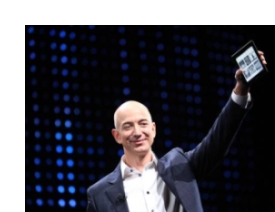
A couple of weeks ago there was the rather surprise announcement that Jeff Bezos (the Amazon founder and CRO) was buying the Washington Post.
It was a purchase he made with his own considerable fortune and not as
an Amazon acquisition. A move that removed the issue of how to integrate
a loss-making business, into a business in which shareholders were
increasingly keen to see an improvement in short-term profits.
The question that seemed to be on the majority of commentators minds was 'Why'? The newspaper business has been gradually disappearing down the sink hole for years, printed paper sales have been slowly shrinking and there are question marks over how successful the online subscription paywall has been for organisations that have introduced it. So why would one of the world's foremost web entrepreneurs have an interest?
Bezos has always been up for a challenge. He built Amazon for a start, launched the Kindle which now eclipses printed book sales. On top of that he is currently building a commercial space travel business, is raising Apollo rockets from the bottom of the ocean and attempting to build a clock that will last 10,000 years. He is not a man lacking ambition.
There has been conjecture that the purchase is merely a way of lobbying congress, or that it will allow him to control the agenda around Amazon's alleged tax avoidance. Those viewpoints can't be ignored, however there is a sound argument to say that he could be simply attempting to conquer the delivery of content online. He has already bought a stake in the Business Insider an online news property and far from trying to strip the asset, he actually invested in the quality of the title as Andrea Peterson writes in her Washington Post article:
“You might have heard that Jeff Bezos just bought us. So what does that mean for our pursuit of journalism? Taking a look at what happened to Business Insider earlier this year is a good start. Bezos joined in with the business news site’s owners to invest $5 million into building up its news and editorial operations.”
So reduction in journalistic integrity doesn’t seem likely, which means what he is most likely to bring is technical know-how. As Mike Ananny, Professor at The Annenberg School for Communication and Journalism, states "Amazon is really a technology infrastructure company". Ananny is spot on. Amazon’s online recommendation facility is second to none and could prove invaluable to an online news property delivering relevant content to a reader. What Bezos could therefore bring, is that core customer experience, which may make the building of more customised content experiences a more straightforward process. In turn that means he could potentially look to develop a paid content model that more accurately reflects Netflix or iTunes, than the blanket paywall blockade adopted by publishers such as News UK (formerly News International).
Ananny again states "You can take a lot of the friction-removing processes Amazon has mastered over the years and apply them to news. How do you buy a digital subscription? How do you do a vacation-hold? How do you save stories? How do you share stories? But also how do we actually read things -- how is it customised on the fly?"
This acquisition is an incredibly interesting move in terms of the future of content delivery and if a new paid content model is established it could prove invaluable to advertisers who are likely to be very keen to deliver customised messages to extremely targeted audience segments. Whatever happens as The Verge puts it “… there's going to be a huge collision between classic journalism and stunning technology.”
The question that seemed to be on the majority of commentators minds was 'Why'? The newspaper business has been gradually disappearing down the sink hole for years, printed paper sales have been slowly shrinking and there are question marks over how successful the online subscription paywall has been for organisations that have introduced it. So why would one of the world's foremost web entrepreneurs have an interest?
Bezos has always been up for a challenge. He built Amazon for a start, launched the Kindle which now eclipses printed book sales. On top of that he is currently building a commercial space travel business, is raising Apollo rockets from the bottom of the ocean and attempting to build a clock that will last 10,000 years. He is not a man lacking ambition.
There has been conjecture that the purchase is merely a way of lobbying congress, or that it will allow him to control the agenda around Amazon's alleged tax avoidance. Those viewpoints can't be ignored, however there is a sound argument to say that he could be simply attempting to conquer the delivery of content online. He has already bought a stake in the Business Insider an online news property and far from trying to strip the asset, he actually invested in the quality of the title as Andrea Peterson writes in her Washington Post article:
“You might have heard that Jeff Bezos just bought us. So what does that mean for our pursuit of journalism? Taking a look at what happened to Business Insider earlier this year is a good start. Bezos joined in with the business news site’s owners to invest $5 million into building up its news and editorial operations.”
So reduction in journalistic integrity doesn’t seem likely, which means what he is most likely to bring is technical know-how. As Mike Ananny, Professor at The Annenberg School for Communication and Journalism, states "Amazon is really a technology infrastructure company". Ananny is spot on. Amazon’s online recommendation facility is second to none and could prove invaluable to an online news property delivering relevant content to a reader. What Bezos could therefore bring, is that core customer experience, which may make the building of more customised content experiences a more straightforward process. In turn that means he could potentially look to develop a paid content model that more accurately reflects Netflix or iTunes, than the blanket paywall blockade adopted by publishers such as News UK (formerly News International).
Ananny again states "You can take a lot of the friction-removing processes Amazon has mastered over the years and apply them to news. How do you buy a digital subscription? How do you do a vacation-hold? How do you save stories? How do you share stories? But also how do we actually read things -- how is it customised on the fly?"
This acquisition is an incredibly interesting move in terms of the future of content delivery and if a new paid content model is established it could prove invaluable to advertisers who are likely to be very keen to deliver customised messages to extremely targeted audience segments. Whatever happens as The Verge puts it “… there's going to be a huge collision between classic journalism and stunning technology.”
Monday, 24 June 2013
Short form video gets traction
 When Twitter introduced Vine,
the six second video format, last year, it was met with a rather muted
reaction. After the inevitable flurry of sign ups and people starting to
use it, interest seemed to drop off. Other than some mildly engaging stop motion videos
there seemed little real utility for it as a medium and indeed, as many
pointed out, short-form video had existed in conjunction with Twitter
for years with services like Twitvid.
When Twitter introduced Vine,
the six second video format, last year, it was met with a rather muted
reaction. After the inevitable flurry of sign ups and people starting to
use it, interest seemed to drop off. Other than some mildly engaging stop motion videos
there seemed little real utility for it as a medium and indeed, as many
pointed out, short-form video had existed in conjunction with Twitter
for years with services like Twitvid.
Interestingly though in the last couple of months it's seen a gradual emergence as people have got to grips with it. It's been used to great comic effect with 'Ryan Gosling won't eat his cereal', but more significantly from a marketing perspective the DIY brand Lowe has found a quite brilliant use for it to publish 6 second home maintenance master classes and suddenly Vine seems to be popping up all over Twitter as part of different brands' Twitter content strategies.
Then last Thursday the short-form video sharing space hotted up. Instagram, the Facebook owned photo sharing network, launched a short-form format. Users can record up to 15 seconds, 9 seconds more than Vine, it has 13 custom filters, and users have the ability to select their own thumbnail as well. Instagram usage figures are huge, with 16 billion photos posted and with 1 billion likes a day, so it wasn't surprising that hours after the Instagram launch Twitter started to send emails to its user base promoting Vine. The launch is undoubtedly a direct attack on Vine and Instagram's much broader range of usage and customisation could prove, yet again, that first mover advantage is not all it’s cracked up to be.
Subscribe to:
Posts (Atom)