Wednesday, 28 August 2013

Transforming the delivery of printed news

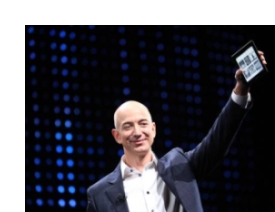
A couple of weeks ago there was the rather surprise announcement that Jeff Bezos (the Amazon founder and CRO) was buying the Washington Post. It was a purchase he made with his own considerable fortune and not as an Amazon acquisition. A move that removed the issue of how to integrate a loss-making business, into a business in which shareholders were increasingly keen to see an improvement in short-term profits.

The question that seemed to be on the majority of commentators minds was 'Why'? The newspaper business has been gradually disappearing down the sink hole for years, printed paper sales have been slowly shrinking and there are question marks over how successful the online subscription paywall has been for organisations that have introduced it. So why would one of the world's foremost web entrepreneurs have an interest?

Bezos has always been up for a challenge. He built Amazon for a start, launched the Kindle which now eclipses printed book sales. On top of that he is currently building a commercial space travel business, is raising Apollo rockets from the bottom of the ocean and attempting to build a clock that will last 10,000 years. He is not a man lacking ambition.

There has been conjecture that the purchase is merely a way of lobbying congress, or that it will allow him to control the agenda around Amazon's alleged tax avoidance. Those viewpoints can't be ignored, however there is a sound argument to say that he could be simply attempting to conquer the delivery of content online. He has already bought a stake in the Business Insider an online news property and far from trying to strip the asset, he actually invested in the quality of the title as Andrea Peterson writes in her Washington Post article:

“You might have heard that Jeff Bezos just bought us. So what does that mean for our pursuit of journalism? Taking a look at what happened to Business Insider earlier this year is a good start. Bezos joined in with the business news site’s owners to invest $5 million into building up its news and editorial operations.”

So reduction in journalistic integrity doesn’t seem likely, which means what he is most likely to bring is technical know-how. As Mike Ananny, Professor at The Annenberg School for Communication and Journalism, states "Amazon is really a technology infrastructure company". Ananny is spot on. Amazon’s online recommendation facility is second to none and could prove invaluable to an online news property delivering relevant content to a reader. What Bezos could therefore bring, is that core customer experience, which may make the building of more customised content experiences a more straightforward process. In turn that means he could potentially look to develop a paid content model that more accurately reflects Netflix or iTunes, than the blanket paywall blockade adopted by publishers such as News UK (formerly News International).

Ananny again states "You can take a lot of the friction-removing processes Amazon has mastered over the years and apply them to news. How do you buy a digital subscription? How do you do a vacation-hold? How do you save stories? How do you share stories? But also how do we actually read things -- how is it customised on the fly?"

This acquisition is an incredibly interesting move in terms of the future of content delivery and if a new paid content model is established it could prove invaluable to advertisers who are likely to be very keen to deliver customised messages to extremely targeted audience segments. Whatever happens as The Verge puts it “… there's going to be a huge collision between classic journalism and stunning technology.”

Monday, 24 June 2013

Short form video gets traction

When Twitter introduced Vine, the six second video format, last year, it was met with a rather muted reaction. After the inevitable flurry of sign ups and people starting to use it, interest seemed to drop off. Other than some mildly engaging stop motion videos there seemed little real utility for it as a medium and indeed, as many pointed out, short-form video had existed in conjunction with Twitter for years with services like Twitvid.

Interestingly though in the last couple of months it's seen a gradual emergence as people have got to grips with it. It's been used to great comic effect with 'Ryan Gosling won't eat his cereal', but more significantly from a marketing perspective the DIY brand Lowe has found a quite brilliant use for it to publish 6 second home maintenance master classes and suddenly Vine seems to be popping up all over Twitter as part of different brands' Twitter content strategies.

Then last Thursday the short-form video sharing space hotted up. Instagram, the Facebook owned photo sharing network, launched a short-form format. Users can record up to 15 seconds, 9 seconds more than Vine, it has 13 custom filters, and users have the ability to select their own thumbnail as well. Instagram usage figures are huge, with 16 billion photos posted and with 1 billion likes a day, so it wasn't surprising that hours after the Instagram launch Twitter started to send emails to its user base promoting Vine. The launch is undoubtedly a direct attack on Vine and Instagram's much broader range of usage and customisation could prove, yet again, that first mover advantage is not all it’s cracked up to be.

Wednesday, 22 May 2013

We should be building great things that don’t exist

Since Steve Jobs became seriously ill the tech community has been looking for a replacement for his mercurial presentation style. In Larry Page they have probably found him. Page is by no means a new kid on the block, but his key note at Google I/O last week prompted the same sort of fanboy enthusiasm that Jobs inspired at Apple.

That fanboy enthusiasm however, has to be based on some serious innovation and that is what Page was able to cover in his keynote last week. There were numerous announcements, but the standouts from a marketing perspective were the newly enriched Google Maps and Google Play music service that will have Spotify seriously worried and the newly updated and enriched Google+.

What came through, time after time, was that here was a company that don't just talk about big data but use it in a way no other company on earth is. That's why Larry Page's pronouncement that “we should be building great things that don’t exist" rang so true.

There is great cause to be nervous about the level of data that Google holds (especially personal), but there is no doubt that they are using that data in amazing ways. None more so than Google Maps, which has become richer and richer almost every quarter since its launch. The product is now marrying the mapping data, 3d capabilities of Google Earth and the smart functionality of its reviews and location services to provide an almost game-like real-world view of an enormous cross section of the world.

Whatever the concerns continue to be about the way Google operate, there is no doubt that they are creating and will continue to create great innovative product.

Friday, 10 May 2013

The rise and rise of YouTube

YouTube is an odd beast, just eight years old, Google owned and so much a part of the fabric of the web that sometimes it gets overlooked as a social network. Yet the site continues to be a phenomenon, hitting almost no speed bumps on its inexorable journey to the top. It is completely peerless and somehow seems to dodge the ire that is directed squarely at its parent company.
  • More than 1 billion unique users visit YouTube each month
  • Over 4 billion hours of video are watched each month on YouTube
  • 72 hours of video are uploaded to YouTube every minute
  • YouTube is localised in 53 countries and across 61 languages
  • In 2011, YouTube had more than 1 trillion views, or around 140 views for every person on Earth
  • Find more stats about Youtube here
So with this enormous rise in usage it comes as no surprise that YouTube has announced a pilot channel subscription scheme, starting out with channels such as Sesame Street and National Geographic signing up to show full episodes.

The announcement has been inevitable since the rise of online streaming services such as HULU and Netflix. With Google's vast infrastructure and the channel embeds that come with a huge range of newly purchased televisions it signals an end to the divide between TV and the Internet. It means any content, on any device, anywhere.

Friday, 26 April 2013

Is Facebook 'Home' what users want from a mobile experience?

Last week Mark Zuckerberg introduced the world to 'Home' it's a product that sees Facebook finally get to grips with the shift to mobile platform access, something that analysts  have been looking for ever since the IPO.

So what is it?
Facebook 'home' is an application that will effectively take over the home screen of the user's smartphone – so long as you have an android phone. The product will operate with devices with Android 4 and above only. Zuckerberg stated that this will put a user’s personal interactions at the heart of their mobile experience.
The launch is a bold move, but it's something that as The Register points out, mobile operators have been attempting to do for over a decade with absolutely no success. The issue that the operators have faced is that they've always approached it from the company's revenue generation opportunity rather than from what a user wants from their experience. That means it’s always fallen short with the handset manufacturers.
Is Facebook the Internet?
This user first positioning is where the Facebook play could be so smart. Many argue, probably correctly, that each user is effectively the Facebook product. In reality however, to many users Facebook is the Internet, it's where they go first and where they get a huge amount of their information. So, having it as the homescreen will make sense to a huge proportion of the Facebook community. In July last year the users accessing Facebook via mobile was 543m well over half the base.
Add to that that the amount of time spent on Facebook (estimated at 1 in 7 of all internet minutes) and this adds up to a huge opportunity to launch those users straight into the Facebook environment.
What about our privacy?
There have been deep concerns expressed around the impact on privacy, with many feeling this will simply provide Facebook with the data to track a user’s every finger movement as well as their actual geographical movement. The other obvious objection is regarding the 'user as a product' argument. Home provides a platform for advertisers to place ads directly on to the home screen. This has the potential for users to become hugely disgruntled and advertisers are warning that ads must not intrude on user's experience.
The product launched last Friday and we'll see whether Adam Moressi (Facebook product designer) is correct in building an app that is "...trying to do is shift people's focus away from tasks and apps, and toward people". Or whether Charles Golvin, an analyst at Forrester Research, is correct in his assessment that "Facebook thinks it's more important to people than it actually is...for the vast majority of people, Facebook just isn't the be-all and end-all of their mobile experience," he said. "It's just one part."
In the meantime you can take a look at what happened when The Verge took it for a trial run.

Monday, 25 March 2013

"The future is (nearly) here and it's idiotic"

Sometime during the controversial launch of the Samsung S4 smartphone last week I picked up the following tweet, 'Eye scrolling. The future is (nearly) here and it’s idiotic' The tweet related to the innovation within the new Samsung smartphone that means that the interface will now track your eye movements and automatically scroll accordingly. The smartphone has been greeted with mixed reactions, from the tweet above, to some with a slightly warmer embrace LG certainly are taking issue with it, as they feel it may be infringing their patent.

A step too far?
The negative reaction does however engender some questions about the pace of innovation. In a recent discussion with an executive at Imagination Technology the computer chip technology manufacturers that help drive the graphics for mobile devices like the iPhone and tablet computers, he stated that we are only seeing the tip of the iceberg in terms of technology roll out and that there was an innovation roadmap that went on for years. When we put it to him that this might simply not fit with what consumers actually want he replied 'What are we supposed to do? Stop innovating?' It’s a fair point, but something makes us feel we may be hitting a crossroads.

Unwanted innovation
A couple of weeks ago I wrote about Google Glass and on-wrist technology being developed by Apple and indeed Samsung. While these products play well in geekier circles the noise from the average citizen seems to suggest that people just 'won't want it' and as these innovation announcements become more mainstream news there seems to be an increasing backlash. So how should we be approaching new innovation?

There is a tendency in industry to chase the 'new'. But with the new coming like a tsunami and from every angle, business' ability to use it to its advantage is gradually being eroded. Indeed, if we are to assume that consumers are actually getting tired of constant 'new' perhaps it’s time to consolidate our thinking and start looking at pragmatic implementation of technologies so that people can better use what they already have. Let's make apps with a fantastic user experience. Let's make video that works on all platforms.Let’s make websites work on a mobile. In short let’s give people what they want to make their life easier, not what the technologists think might be cool.

Thursday, 7 March 2013

The future of mobile is wearable

There's been a lot written over the past few years about the future of mobile. Much of it has been accompanied by ‘Tomorrow's World’ type predictions. In the past year or so however, those predictions have started to gain real credibility. Two projects in particular have been making waves since Christmas.

Project Glass
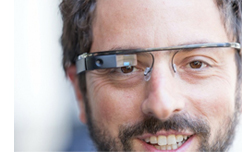
Project Glass, something that Google gave us a view of in late 2011, has been gaining momentum; both in the rumour-stakes and seemingly in its route to commercial development. Since its first announcement, Sergey Brin has been seen out and about on the New York Subway wearing a pair. Soon after that this concept video was released outlining just what the capability of this wearable tech may be.

There has been understandable scepticism about whether the project is just a scam and if not, whether it's actually commercially viable. However, there is emergent chatter that suggests that not only are they likely to be 'relatively' affordable but that actually, they may be available within the year.

That timescale would be astonishing frankly. Whether the time frame is correct or not, the reality is, the project definitely seems to be on the way. What is certain, as Forbes points out, is that the controlled leaking is a master stroke of market pre-conditioning. What the public appetite is, is yet to be assessed properly, but some are speculating it could be something like this.

iWatch
Last year Nike released the Fuel Band, a wearable interactive band that augments your exercise regime. With its rather nebulous Fuel Points system, Nike say it is able to help you monitor the level of exercise you are undertaking more efficiently and with seamless integration with your social profiles it is definitely the smartest and most human-integrated item in the emergent wrist band market.

More interestingly, it was rumoured that Sir Jonathan Ive of Apple had bought dozens of boxes of the devices to work out how he could make it better. He's already done it with the MP3 player, the smartphone and the tablet so when rumours of iWatch popped up there was understandable excitement.

The wrist seems to have been the obvious place for the phone to go, ever since David Hasselhoff started chatting to Kit. Given they appear to no longer be the darlings of the smartphone market it's probably time for Apple to zag, as the industry zigs its way through MWC 2013 and potentially launch a product later on in the year. If it happens, it would be the first significant announcement since Steve Jobs’ death and would most likely smooth the bumps in the share price that have emerged since disappointing iPhone and iPad sales in Q4 2012.

Wrist or face?
2014 could see the biggest battle fought over your face, or your wrist and ultimately maybe it’ll come down to what you’re most comfortable with, or maybe what looks cooler. At this very moment we’re going for Project Glass, but that’s probably because we know just that little bit more about it at the moment.